
Work-Life Balance Profile #21: Kerry*
(TL;DR heads-up that this is a long blog post! The following introduction provides a flavour of the content)
Introduction to Kerry’s Profile
There is no shortage of examples in this blog of situations where people feel overwhelmed by their “work” and “life” loads. After all, that is often the catalyst for pursuing balance in the first place. In this respect, Kerry’s story of a having a never-ending ‘to-do list’ is a universal one, which may resonate with many readers.
Kerry’s challenges in this respect are compounded by her inclination towards perfectionism, again something that is quite commonplace, and which has been touched on by other guests featured on A Fine Balance, such as Katie Ford, who spoke on the podcast about her pursuit of balance as a “high achiever“.
Less commonplace, however, is Kerry’s choice to become a solo mum. That said, the number of single women pursuing IVF with a sperm donor are globally on the rise. In the UK alone, it is estimated that the number of single women using fertility clinics has tripled in the last decade.
In this Work-Life Balance Profile, Kerry shares her experience of finding balance as a solo mum, from both a work and home perspective. And, in particular, the contrast of “job-sharing” in each setting.
Kerry brings a new dimension to the work:life ratio I ask all my guests to reflect on, inserting the element of “play”, which for her has been lacking since becoming a mother:
“It never feels like a day when I don’t have lots to do. Where is the fun? Where is the play?”
A reminder, if ever we need one, of how joy is so intrinsic to the pursuit of balance.
*The names and some details have been changed for confidentiality purposes
Work : Life : Play Ratio
50 : 45 : 5
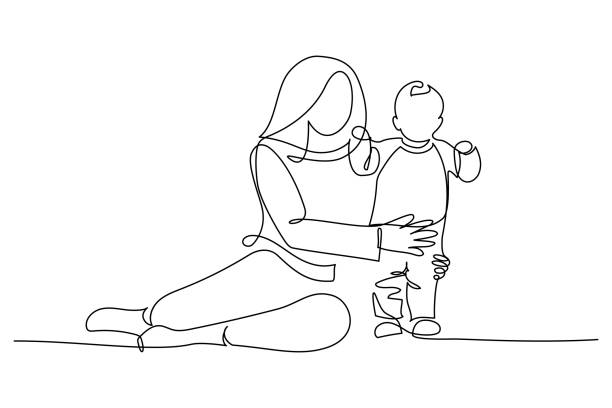
Kerry’s day normally starts at the crack of dawn with the wake-up call of her four year-old son. As a “solo” (as opposed to “single”) parent, Kerry took the route of pursuing IVF with a sperm donor, and is the sole parent of her son and singly responsible for his care. The two of them live in a flat in London, within cycling distance of their school and workplace locations.
Kerry works part-time as a Senior Manager in an International Non-Governmental Organisation, as part of a job-share. The three days a week that she works are book-ended by dropping off and collecting her son from school. He arrives in time for breakfast club and from thereon, Kerry works solidly throughout the day, until the school’s closing time. In her words: “I have a hard stop at 5pm and cycle furiously to pick him up”.
This set-up has forced Kerry to create very defined boundaries between the time she devotes respectively to “work” and “life”:
“When you’re a solo parent, you have no choice but to switch off from work when the clock strikes the hour, to shut your laptop and bomb it to school”.
Kerry feels like she has an adequate balance between “work” and life”, which hasn’t always been the case. She describes working as part of a job-share as “liberating”, safe in the knowledge that her work continues when she is out of the office. She may occasionally check-in with her work over the weekend in order to not fall behind, but this is not a regular occurrence, nor one that she feels infringes on her personal life (though she feels guilty for placing her son in front of a screen while she does this).
Kerry’s evenings are short and by the time she has settled her son, who was recently diagnosed as being autistic and having ADHD, she is exhausted. She may watch some television to unwind, but won’t manage to keep awake much later than her son’s bedtime at 8pm.
Kerry spends her non-working days cleaning and taking care of “life admin”. She relies on these days for her life to function, though there isn’t much time or headspace for any of the interests or hobbies she used to enjoy like running, reading or indulging in good food and wine with friends. “I’m no good for doing anything in the evenings. If I didn’t have my non-working days, I genuinely don’t know when I would get the cleaning and admin done”, she says.
Kerry’s lifestyle and work-life balance has shifted dramatically over the past couple of years. Just before the Covid pandemic struck, she was posted abroad with her job to lead a team in one of her organisation’s African-based offices. Her maternity leave had only just ended and she found herself working a demanding, high-pressured, full-time job. Her work was entirely home-based because of the pandemic, which in a new and foreign country, where she knew nobody, was incredibly isolating. All the while, she was adapting to parenthood, and unable to go out and socialise with her new contemporaries. Her balance then felt very much off-kilter.
In her current situation, Kerry’s balance is less skewed on the “work” side, however, she still doesn’t feel like she’s got it right. Her job-sharing arrangement has helped, as has being geographically closer to friends and family. However, the aspects of “life” that feel like hard work dominate, which is not all together satisfying:
“40-45% of my time is spent parenting or managing life. It’s life, not work. But it’s not restful or enriching to my personal wellbeing or growth or fun. So even though I only work three days a week, I still don’t feel brilliantly balanced”.
Whilst Kerry describes her posting abroad as “two years of hellish life in Africa”, there is something of the expatriate lifestyle that she misses and longs for again. The simplicity of it beckons her: though the work is hard, the logistics, pressure and expectations of the “life” side is somehow diminished and taken care of.
Kerry has finally managed to find the sweet spot for the “work” side of her balance. Pursuing an element of “play” that has got lost along the way on the “life” side, may well be the missing piece of her ‘fine balance’ puzzle.
Now where did that spoonful of sugar get to?
Kerry has a white board above her desk on which she lists all the tasks that require action. Anything that makes it onto the list invariably falls under the “life” side of her work-life balance. “Work” to-do lists remain firmly encased within her laptop and occupy a different, ring-fenced part of her brain.
There is something depressingly heavy about these tasks that amount to her “life”. They feel like hard work, even though they happen outside of her paid working hours, and they don’t generate an income in of themselves. Neither are any of the actions listed particularly fun, relaxing or enriching.
Yet, there are jobs to be done. To all intents and purposes, these are “work”; the work of life, essential admin, without which Kerry’s life could not function. And here’s the rub, which will no doubt be familiar to many readers: that list never ends. Kerry may get the satisfaction of rubbing a marker scrawl off the board every once in a while, but no sooner does she erase one task, than a few more arise. And so it continues.

“It never feels like a day when I don’t have lots to do. Where is the fun? Where is the play?”, she asked me rhetorically during our interview.
For Kerry, this is the essence of what is missing from her work:life ratio. This is where her sense of balance gets unstuck.
Perhaps we need a third ratio component here, Kerry and I concur: work:life:play. If that were the case, Kerry says, hers would read along the lines of:
50 (work): 45 (parenting and life admin): 5 (things I do for myself that make me happy)
It takes barely a breath for the guilt to creep in, as Kerry reflects where within this breakdown time with her son falls:
“I feel emotional saying this, as I don’t want to think of time with my son as “work”. But 40-45% of my time not working is spent with him or managing life. It’s life, not work. But it’s not restful or enriching to my personal wellbeing or growth or fun. So even though I only work three days a week, I still don’t feel brilliantly balanced”.
What Kerry reflects on is something I regularly see, and discuss, with working mothers: the volume.
The volume of things to do – both relating to work and life – is IMMENSE.
There is no end to it. There is no point trying to tame it; it cascades without reprieve. All you can do is master yourself to filter the deluge; to be selective with how much you will allow it to overwhelm you.
Kerry, who has no partner with whom to share the mental or physical load, described the stark reality of what she describes as “a to-do list that is already unachievable before I’ve even started”. It casts a heavy, overbearing shadow over everything, and saps the joy from life. Is this the inevitability of ‘becoming a grown up’? The realisation that her life has slipped to this existence is jarring: the joy needs reclaiming.
A Job Shared is a Burden Halved
It hasn’t always been this way.
When Kerry first reached out to share her story on ‘A Fine Balance’, she was living as an expat out in Africa. Not one to do things by halves, she had just relocated to this exotic destination following the birth of her first child, which coincided with her promotion to become a Senior Manager, a position that involves an increasingly significant level of responsibility and public accountability.
All of these changes coincided with another event of disproportionate magnitude: the global Covid pandemic. So, not only had Kerry moved continents, started a new more senior role at work, become a mother, but now she found herself almost entirely isolated, living and working remotely alone with her son in a locked-down situation. It was not the life abroad that she had intended for herself.
One of the biggest distinctions between living in the UK and living as an expat abroad is that as an expat, much of your ‘life admin’ is taken care of for you. Your accommodation is rented so any repairs are not yours to solve; all bills are amalgamated, and many costs taken care of as part of the relocation package. This is something that Kerry said she particularly benefitted from as a solo parent.
Away from family and friends, there was also not the expectation to accommodate other people in her life the way that she does when visiting is a regular option.
Living abroad was clearly not without its challenges for Kerry, but they were very different to the ones that she now faces.
Her saving grace now is her job-share arrangement. Of this, she says:
“The beauty is you’re a team so if you’re suited to collaborating and you can trust someone 100%, this is the perfect solution, as you know someone capable and wonderful is moving something forward while you’re out of the office”.
She says this can’t compare to part-time working, where there’s always “the worry that you’re leaving other people to pick things up”.
I couldn’t help but spot the parallel of Kerry being able to share the “work” load, but not the “life” load of all she has on her plate.
This reinforces the job-sharing element of parenting, when more than one guardian is on the scene.

I’ve covered the stories of single mothers on the blog before. Although they were both co-parenting with the fathers of their children, Susan and Jhilmil, acknowledged that being the sole parent at home had an impact on their overall sense of balance.
Jhilmil described the challenge of co-parenting with a former partner with whom she had limited contact and inflexible custody arrangements: she talked about the weight of the mental load involved in managing her daughter’s schooling and day-to-day care, while juggling a full-time career. And how this leaves little time or space to create fun times together. And it takes a real effort (and lots of guilty feelings) to get all of her work done within working hours, to leave her weekends free for other things.
Susan’s story shone a light on the burden of financial pressures experienced by single parents who are missing the security of another person’s income and support network. Susan described how hard she finds it to justify, or afford, the time to spend on herself, when her children’s needs are far more pressing.
Of course parenting as a married couple is not exactly a walk in the park, with each partnership having to navigate both individual’s priorities and establish a joint approach to sharing the mental and practical loads of life lived in union. However, there is at least the potential to “job share” the parenting and house-keeping tasks; something that is not readily available to single or solo parents.
Perfect is the enemy of the good
I first came across the phrase “perfect is the enemy of the good” when a senior colleague of mine advised that striving for perfection when working in fast-paced, high-pressured roles (as we were at the time) can be counterproductive: better to resist the temptation of perfecting your work, than risk missing your chance to make any impact at all.
Though this may go against our professional instincts and expectations, she explained, “good” can be good enough. Sometimes it just has to be.
This has endured as a useful benchmark to propel momentum for me personally both at home and at work. Or, as a former guest of this blog and podcast, Laurie Macpherson, put it, to employ the “f**k-it finger”.
“Hovering over the “send” or “publish” button? Just do it.”
Extract from: Finding Balance on Her Own Terms: “Single by Choice; Childfree by Choice”. Laurie’s Story – On Doing ‘What Suits You’
Kerry relayed this same notion when she talked to me about her work ethic. A capable, intelligent person, who is proud of the work she does, Kerry struggles to give herself the permission required to settle with good enough.
“When a senior colleague at work tells me “don’t spend too long on this”, it’s gold dust to me. Left to my own devices, I will go to extremes to finesse the work to perfection. I need that external validation to give me licence to trust my instincts. Otherwise, I constantly feel like there is more that I could do”.

Here Kerry relays how co-dependent “good being enough” is to external validation. There is liberation in her being told that what she has done is enough. Yet, relying on others to tell you to go easy on yourself (either at work or at home) is likely to lead to disappointment. Which leads me to question…
Is balance attainable for a person inclined towards perfectionism?
Probably not without finding acceptance of “good” being good enough, even if it isn’t perfect.
“I always pile too much on my plate”, Kerry told me, describing how she struggles with setting boundaries, feeling uneasy and guilty when taking a break. I was reminded of the viewpoint that a previous blog guest, Tahmid Chowdhury, shared when he described the burnout he experienced when working a full-time job and living alone:
“When no one is there waiting for you, or telling you, to stop working, how do you decide when – and why – it’s time to give yourself permission to take a break?”
Extract from Tahmid’s Story – Ethnic minority beginnings, burnout and career change
Kerry is left with an impossible dilemma; a catch 22 of sorts: either dropping what is on her plate, or dropping her standards. Of the two options, “dropping standards”, she says “is a harder emotional challenge”. She went on to describe her constant worries about whether she is a good enough parent:
“Would I be a better parent if I was less impatient, or if I let him have less screen time, or if I spent more time with him, or if I was more intentional?”, she futilely asks.
Obtaining external validation of your work as a parent is a rare thing to come by; probably even more so if you’re parenting alone. So, deciding where you draw the line between “good enough” and “perfect” ideally needs to come from within.
Despite being so career-oriented, Kerry says that she thinks that she is her “best self” when she is legitimately not working, such as travelling or on maternity leave, which she refers to as having been her “happiest time”:
“I have multiple focuses now. But when I wasn’t working on maternity leave, I had a single focus. It was pure joy, instinctive. I had time. I found it really easy”.
You might not guess from her professional demeanour and drive to succeed just how rebellious Kerry was in her teens. She describes her parents as being quite old-fashioned in the sense of how they behaved; “knowing facts was important”, she reflects, and though they were “liberal”, Kerry pushed the limits in a way that she says would “test even the most liberal of parents”. Though she pushed the boundaries by breaking rules around boys, alcohol and behaviour, she still possessed an innate desire to excel.
She looked up to her older brother, whose achievements went on to soar the heights of, for example, getting five A-Levels at grade A and a first in maths from Cambridge University.
She was pleased with her own academic results, but it still bothers her to this day that her straight-A record was spoiled by her missing the top grade in music due to a last minute change in examination papers. This was a case of “good” not being good enough by her own standards.
Conclusion: The pot of gold at the end of the to-do list
Kerry knows that being a perfectionist (or, in her words, a “completionist”) is impossible in the “real world”. She knows that she will never reach the end of her to-do list and she is mindful about setting her priorities so the important things aren’t left to the end. One such thing is her love life, something she would love to devote more attention to:
“I have a real desire to meet a partner, though somehow rarely prioritise dating on my to do list.”
Besides the necessity of working to financially support herself and her son, Kerry is inspired to keep pushing ahead with her career. Her mother, who died when Kerry was a teenager, stopped working when Kerry and her siblings were young. Kerry has a lingering sense that had she lived, and seen the world through Kerry’s different world view, she might have been able to spread her wings more.
Kerry conversely, has piled things high on her “work” and “life” plates; the world is her oyster; it is all for the taking. Though having it all is hard work.

Kerry readily admits that she considers retirement “the pot at the end of the rainbow” and sheepishly confesses that she is partial to “checking [her] pension” to see how soon she can afford to take it.
If easing off on the work side would bring Kerry the sense of balance she desires, waiting until retirement seems like a long game to play. Creating more opportunities for “play” in the meantime, may be more sustaining, if not to just take her mind of the never-ending list that’s unlikely to wind down any time soon.
Listen here to the podcast episode on Kerry’s story of Solo Motherhood, Job-Sharing, and the Lure of the Expatriate Lifestyle